
TL;DR
- What it is: Chris Sawyer’s 1999 park-management sim — hand-written x86 assembly
- Platform/Price: Steam Classic £10 / GOG £5 / OpenRCT2 community port free
- Dad Filter verdict: Buy — still the best game of its kind, 27 years later
- One thing to know: Sawyer wrote 99% in assembly, a level of engineering that has not been repeated since
New to TurboGeek Gaming? Start with the Dad Filter manifesto to understand how I review games — as a 46-year-old dad with two boys aged 10 and 7, not as a professional games journalist. Then check the Gaming hub for every review.
What It Is
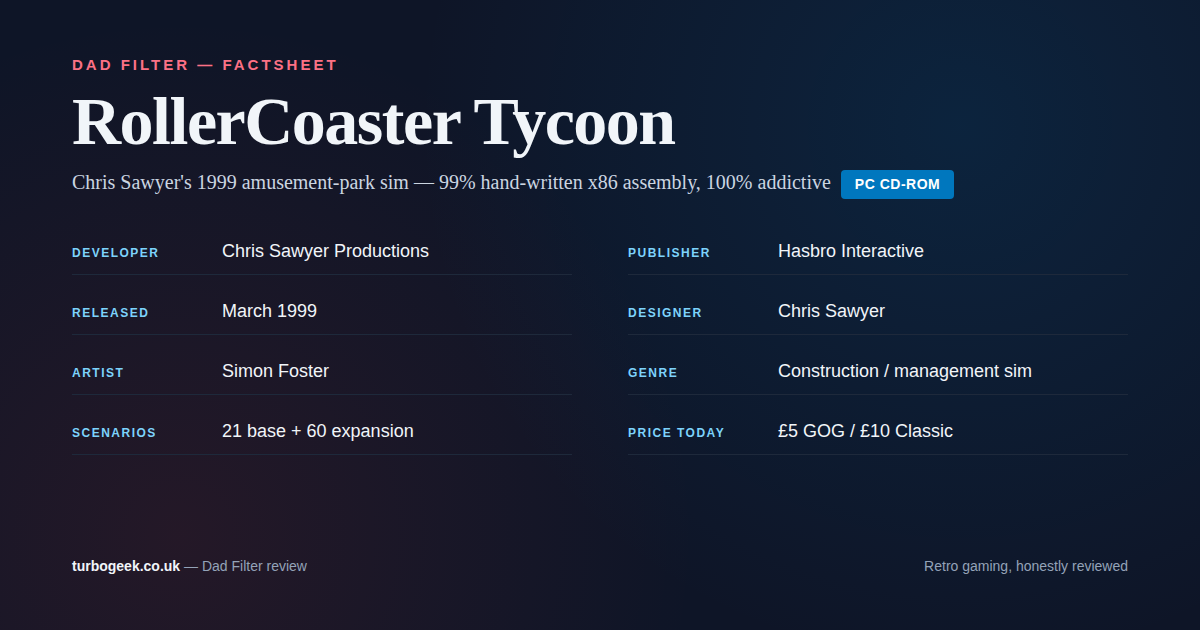
RollerCoaster Tycoon is a construction and management simulation developed by Chris Sawyer Productions and published by Hasbro Interactive in March 1999. You run an amusement park. You build rides, employ staff, set ticket prices, manage landscaping, watch ‘peeps’ wander around forming opinions about your park, and — most importantly — you design custom rollercoasters by laying down tile-based track segments with loops, corkscrews, and zero-g rolls. 21 base scenarios shipped with the original game, each with different park layouts, objectives, and constraints. Two expansion packs added 60 more scenarios between them.
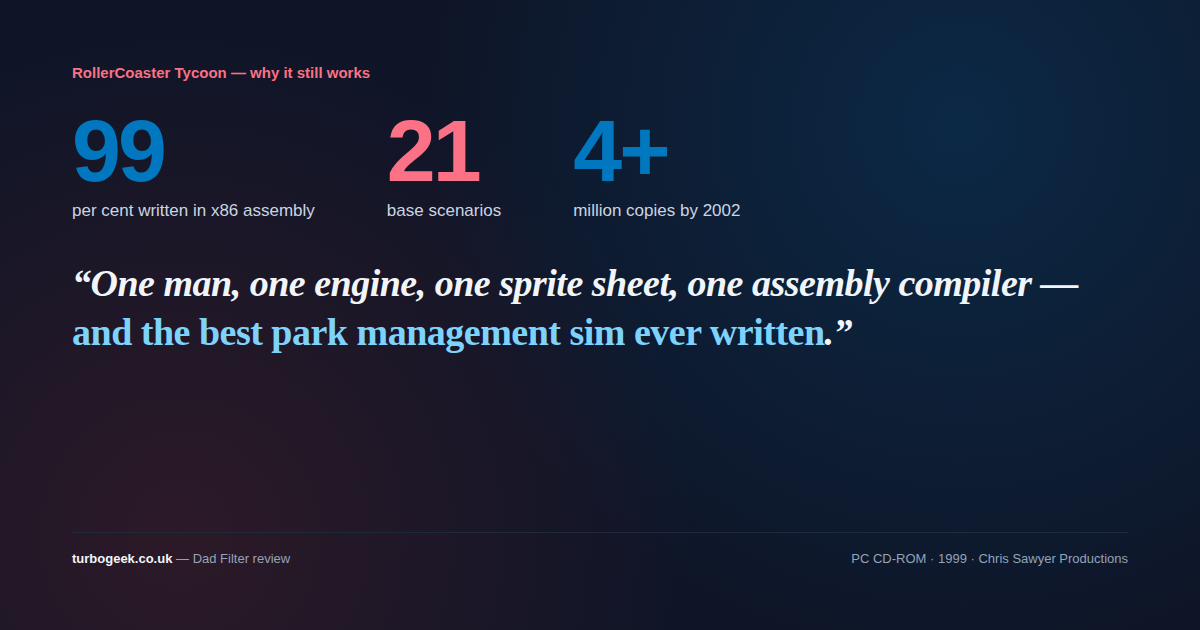
The technical fact that gets repeated about this game is that Chris Sawyer wrote 99% of it in x86 assembly, with about 1% in C for system interfaces, using Microsoft Macro Assembler. This is not a polite approximation. This is a genuinely correct description of how it was built. Graphics came from Simon Foster, rendered as pre-computed 3D sprites. The combination produced a game that ran at full speed on a modest 1999 PC and has since been ported, reverse-engineered, and reimplemented (see OpenRCT2) precisely because the base engineering is so tight.
Why This One Matters To Me
RollerCoaster Tycoon was the game I played instead of my A-level revision in 1999. The family PC had enough RAM to run it, the CRT made the pre-rendered sprites pop nicely, and every time I sat down ‘for twenty minutes’ I would stand up three hours later with a fully operational park and no progress on the coursework. This is a game I have lost serious hours to at every life stage, and I recognise it is still capable of doing the same in 2026.
The specific quality that makes RollerCoaster Tycoon so compelling is its respect for the player’s engagement. You set up a park to make money. The peeps wander in. They buy tickets, buy food, ride rides, leave happy or sad. You iterate. A successful park makes enough to fund a new coaster, and the new coaster attracts better-paying peeps, and the better-paying peeps let you build a better coaster. Every decision is visible. Every consequence is traceable.
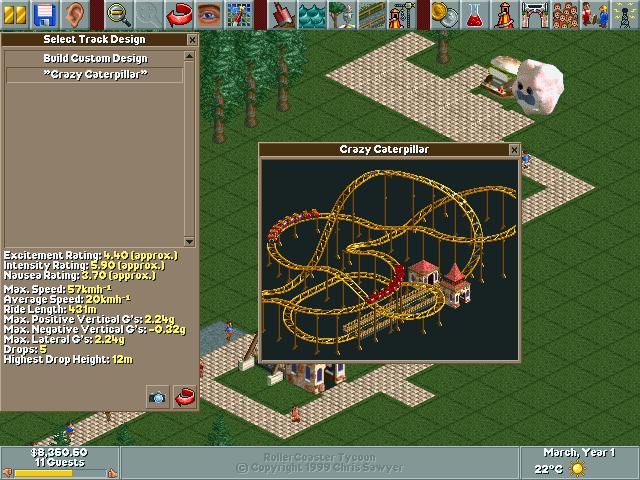
What makes it different from other park sims of the era — and from most park sims since — is the coaster-building system. Laying track, adjusting incline, chaining loops, watching the simulation evaluate your design and tell you if the excitement-to-intensity ratio is right. This is a piece of design that genuinely deserves to be called art. Modern coaster sims have more features and worse tools. The original RollerCoaster Tycoon had the right amount of both.
Kids love this game. My ten-year-old has built several parks, killed several peeps with unsafe coasters (which the game handles with comic grace), and genuinely engaged with the economics. My seven-year-old is mostly in it for the destruction — launching peeps off incomplete coasters is a simulation feature, not a bug, and it is hilarious. This is a game that legitimately spans adult and child interest.
Gameplay Screenshots
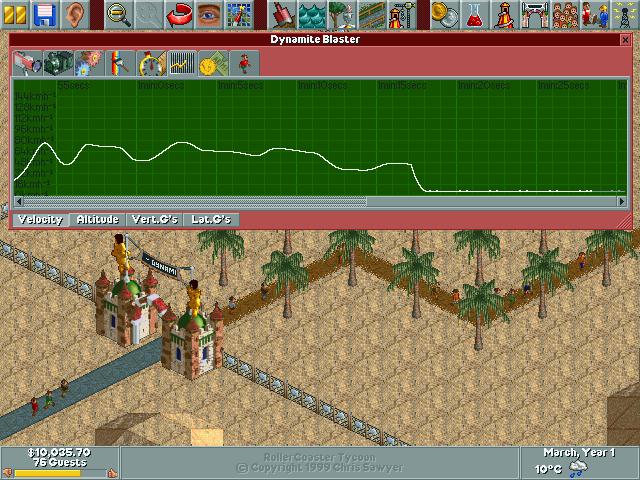
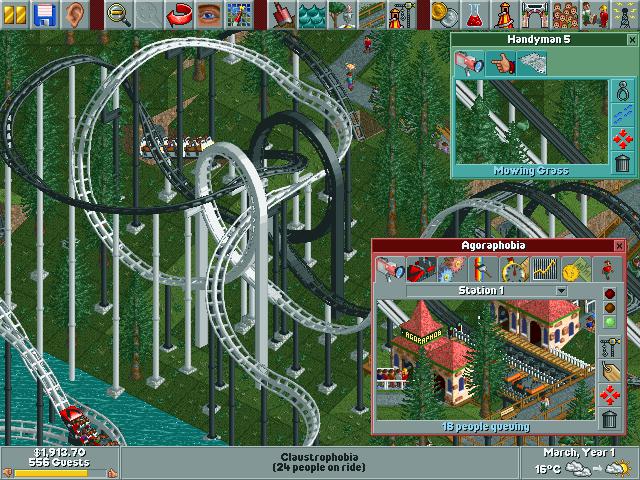
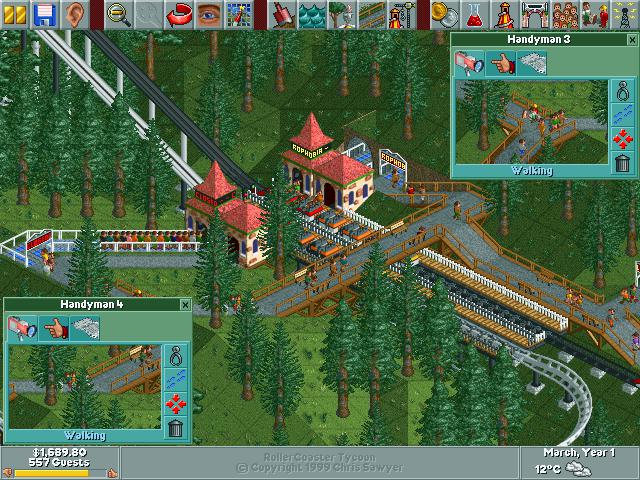
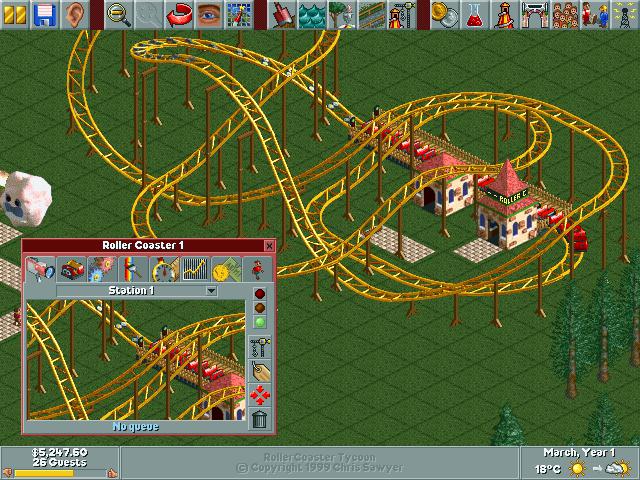
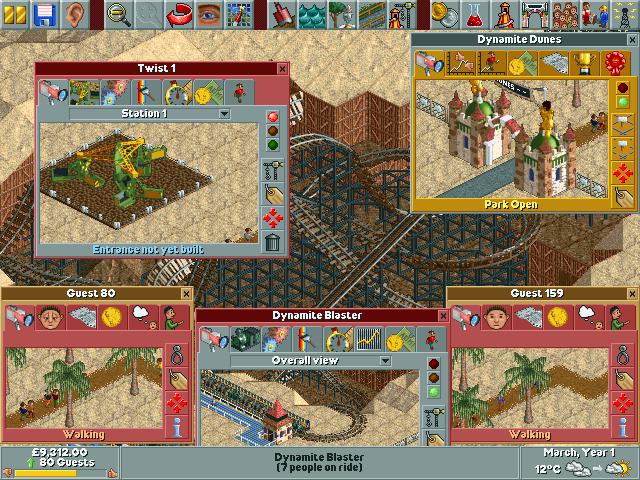
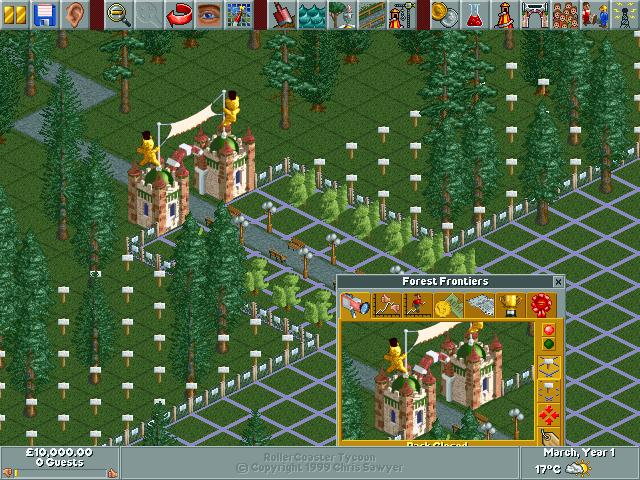
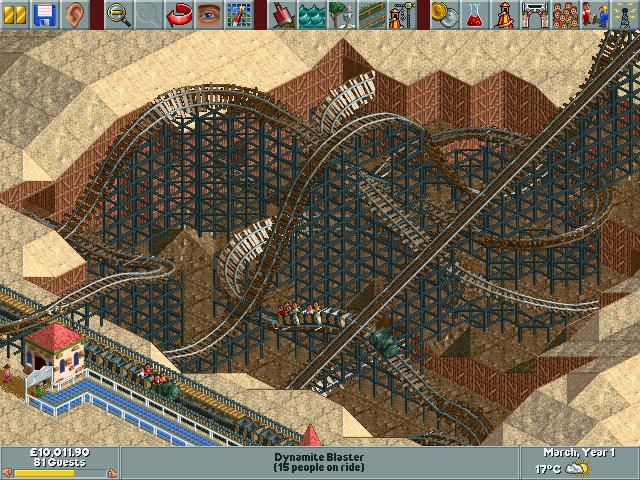
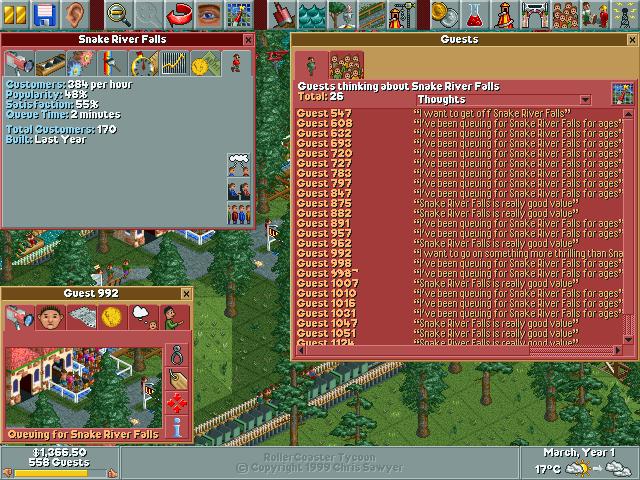
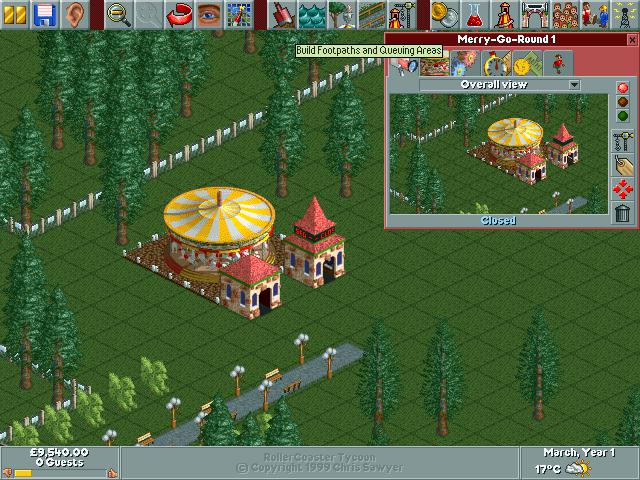
RollerCoaster Tycoon is one of those games where the appeal is in the density: queues, coasters, broken rides, wandering guests, and the slow build from empty map to manic park. A proper screenshot run shows that off faster than another few paragraphs ever could.
The Dad Filter
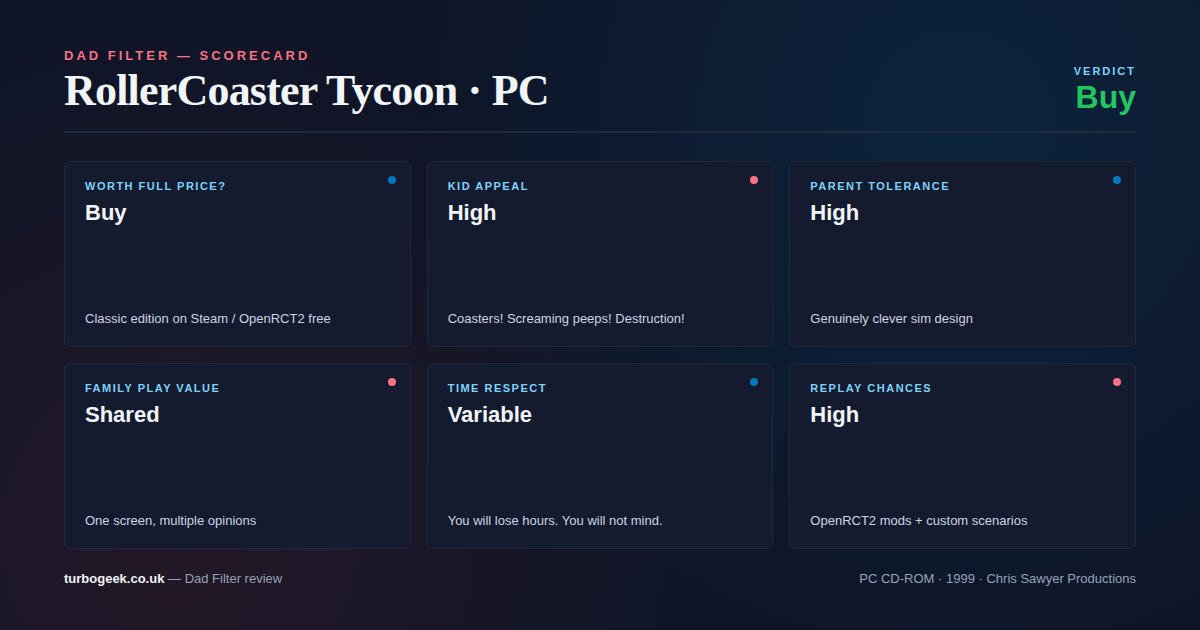
Worth Full Price?
Buy. RollerCoaster Tycoon Classic (a mobile-first reissue that combines the original game with its expansions) is on Steam for around ten pounds and does the job cleanly on modern hardware. The GOG version of the original is around five pounds. OpenRCT2 — the community-driven open-source reimplementation — is free and is arguably the best way to play in 2026.
All three options run the same game at heart. Pick the one that matches your platform and your tolerance for community tooling.
Kid Appeal
High. Building coasters is universally appealing. Watching peeps ride them is universally satisfying. The sim is forgiving enough that kids can make a functional park in ten minutes, and deep enough that they will keep tweaking for hours.
The peep destruction physics (if you build an unsafe coaster) produces a specific kind of giggling that appears in no other game. Handled gracefully by the game; entirely age-appropriate.
Parent Tolerance
High. This is a thinking game. You are managing multiple systems simultaneously, iterating decisions, and watching a simulation respond. For an adult brain it is genuinely restorative — the same sort of pleasure as a good spreadsheet, with better visuals.
The music is a specific fairground loop that gets stuck in your head. Turn it down if you need to. The game does not require it for engagement.
Family Play Value
Shared screen. Best played with one person at the keyboard and the rest of the family contributing ideas. ‘Put a toilet there.’ ‘Build a bigger coaster.’ ‘Charge more for the rollercoaster.’ This is one of the most legitimately family-friendly retro games available.
Hand the controls around between scenarios, or between business decisions. It works beautifully across ages.
Time Respect
Variable. Individual decisions take seconds. The park simulation runs continuously. You can save mid-simulation and walk away. The problem is that you will not want to. This is the rare retro game where the time sink is real.
Factor that in when planning your evening. Set a timer if you have to. The game will still be there tomorrow.
Replay Chances
High. 21 base scenarios, 60 more in the expansions, and effectively infinite sandbox possibilities. OpenRCT2 adds custom scenarios, multi-player, and tooling that the original never had.
You will return to this game every few years for a fortnight of focused park-building. That pattern is exactly what a sim-builder classic should enable.
The Verdict
Buy. RollerCoaster Tycoon is one of the very few retro games that is genuinely better than almost all of its successors. Chris Sawyer’s single-handed engineering produced a sim-builder that has not been meaningfully surpassed. It is deep, accessible, funny, and absurdly well-tuned. 27 years is a long time, and the game still plays like it was finished yesterday.
The Classic re-release and OpenRCT2 between them give you every modern convenience you could want. The original assembly-tuned game runs fine on DOSBox if you really want the period experience. There is no bad version. There is no reason not to play it.
This is a family game in a way that almost nothing else on this retro list is. My boys have played it independently and together. I have played it with them. I have played it alone at midnight when the kids are asleep. It supports every mode of engagement. If you pick only one game from this retro series to buy, pick this one.
Related Reviews
- Bomb Jack on C16/Plus 4 — Dad Review — The arcade in a cassette box, reviewed forty years on.
- V-Rally ’97 — Dad Review — Another nostalgia-first review, this time the PS1 rally classic.
- TurboGeek Gaming Hub — Every review, guide, and parent resource in one place.
- The Dad Filter Manifesto — How and why I review games as a dad, not a gamer.
Leave a Reply