
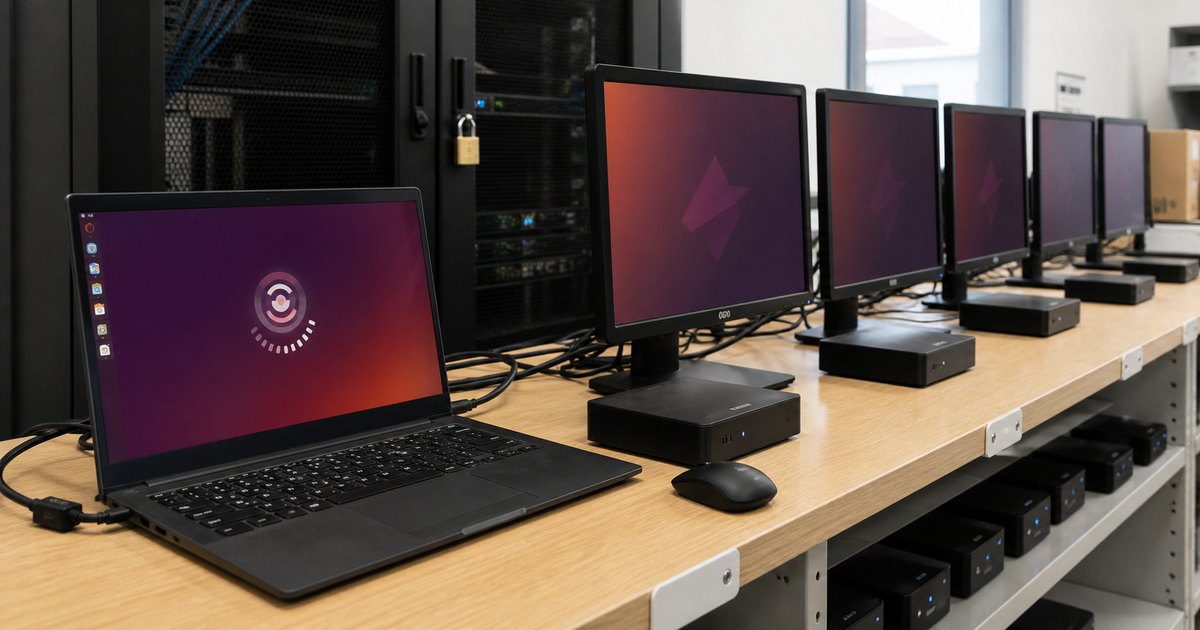
TL;DR – Ubuntu Core Desktop
- The Ubuntu 26.04 desktop roadmap says current work helps pave the way for Ubuntu Core Desktop: that is the clue worth paying attention to.
- The appeal is operational: immutable images, transactional updates and tighter control are attractive for managed endpoints.
- This does not mean Ubuntu Desktop vanishes: it means Canonical wants a stronger locked-down option alongside it.
- Ubuntu Core Desktop makes most sense where management and consistency matter more than local tinkering freedom.
Start here: If you only need the conceptual answer, jump to the section on why Canonical keeps building toward this model. That explains the direction faster than arguing about whether immutable desktops are fashionable.
| Topic | When | What to do |
|---|---|---|
| Managed fleet | You value control and repeatability | Ubuntu Core Desktop is strategically relevant. |
| Kiosk or appliance | Local tampering is a risk | The model makes obvious sense. |
| Normal tinkerer desktop | You like mutability and ad-hoc change | Standard Ubuntu Desktop is still the more natural fit. |
| Security-sensitive endpoint | You want tighter boundaries | Core-style ideas deserve serious evaluation. |
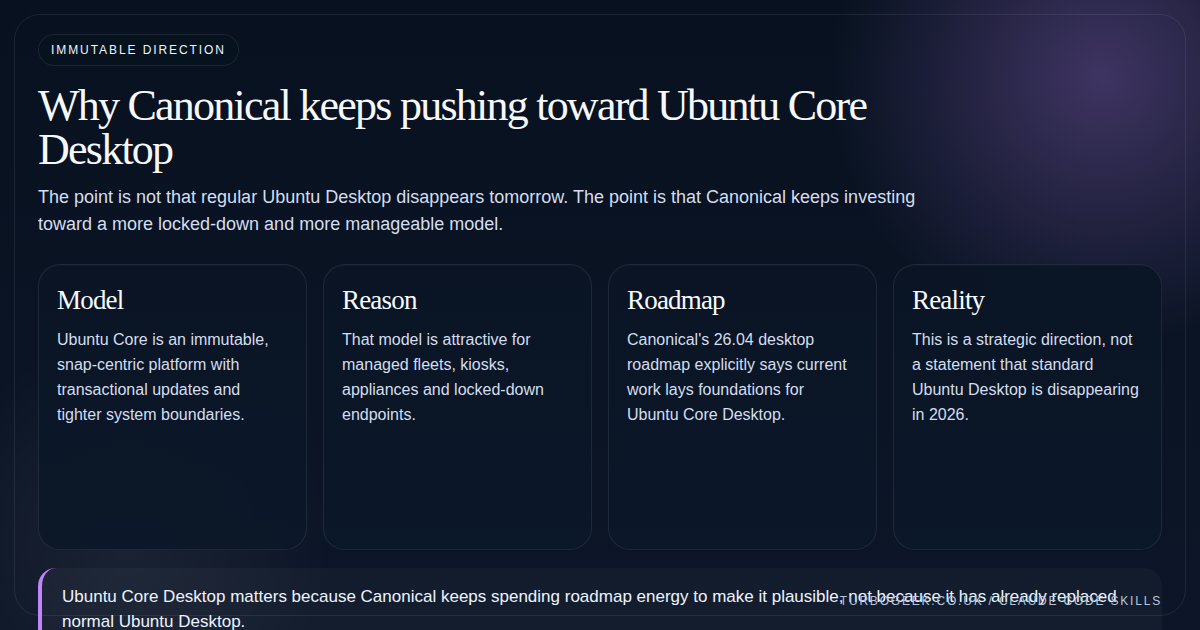
Canonical’s Ubuntu 26.04 desktop roadmap contains one line that matters more than it might look at first glance: current packaging and desktop work is laying a stronger foundation for the future and helping pave the way for Ubuntu Core Desktop.
That matters because it explains why this idea keeps resurfacing. Ubuntu Core is not just another edition name. It is Canonical’s preferred answer to the question of how Linux desktops should behave when manageability, update integrity and tighter system boundaries matter more than free-form local hacking.
What Ubuntu Core Desktop is really trying to solve
Ubuntu Core’s pitch is not ‘look how modern we are.’ Its pitch is that an immutable, transactional, tightly controlled base can reduce drift, improve recoverability, and make fleets easier to reason about. On servers, appliances and embedded systems, that story is already familiar.
Bringing those ideas toward the desktop is about the same operational pressures: managed endpoints, kiosks, education devices, field laptops and any environment where consistency is worth more than endless local freedom.
Why Canonical keeps coming back to it
The Linux desktop has always struggled with the tension between openness and manageability. Canonical’s answer is increasingly clear: keep classic Ubuntu Desktop for general use, but keep building toward a more immutable, more controlled model for the environments that need it.
That is why roadmap items that seem unrelated on the surface often point in the same direction. Packaging discipline, cloud identity integration and better control surfaces all make more sense when you see the longer-term Core Desktop shape behind them.
- Managed fleets want repeatability.
- Security-focused environments want tighter system boundaries.
- Transactional updates and immutable images simplify recovery stories.
How to evaluate the model today
You do not need to wait for a perfect Ubuntu Core Desktop end state to start thinking clearly about the fit. Look at where your own organisation struggles: drift, local tampering, update consistency, or device management. If those are recurring pain points, the model is probably relevant.
If your desktop culture depends on local package freedom and ad-hoc mutation, the fit is weaker. That is fine. Not every machine wants the same philosophy.
# Quick checks to understand how snap-centric a system already is
snap version
snap list
snap changes
snap model --assertion 2>/dev/null || trueThe practical read
Ubuntu Core Desktop matters in 2026 because Canonical keeps investing toward it in public roadmap language. That makes it more than speculation, but still less than a mainstream desktop replacement for everyone right now.
Treat it as a strategic direction with a clear target audience: controlled endpoints, managed fleets and systems where immutability buys you something concrete.
Related next steps
- Ubuntu Server First 30 Minutes: The Setup Checklist I’d Use Every Time
- Linux SSH Hardening Checklist
- How to Enable Remote Access on Ubuntu: SSH vs XRDP vs VNC
- Should You Upgrade to Ubuntu 26.04 LTS Right Away?
- Real-time Ubuntu Is Free in 26.04: Who Should Actually Use It?
- CrackArmor and AppArmor Fixes: What Ubuntu Admins Should Check
Leave a Reply