
TL;DR
- What it is: A voxel-based destruction sandbox with heist missions where you smash buildings apart to plan escape routes
- Platform & price: PC (Steam), around £16
- Dad Filter verdict: Buy Now — one of the best value games on Steam for families
- One thing to know: PC-only, so you will need a decent computer, but it runs surprisingly well on mid-range hardware
New to TurboGeek Gaming? Start with why I review games differently as a dad. Browse all our reviews at TurboGeek Gaming.

What It Is
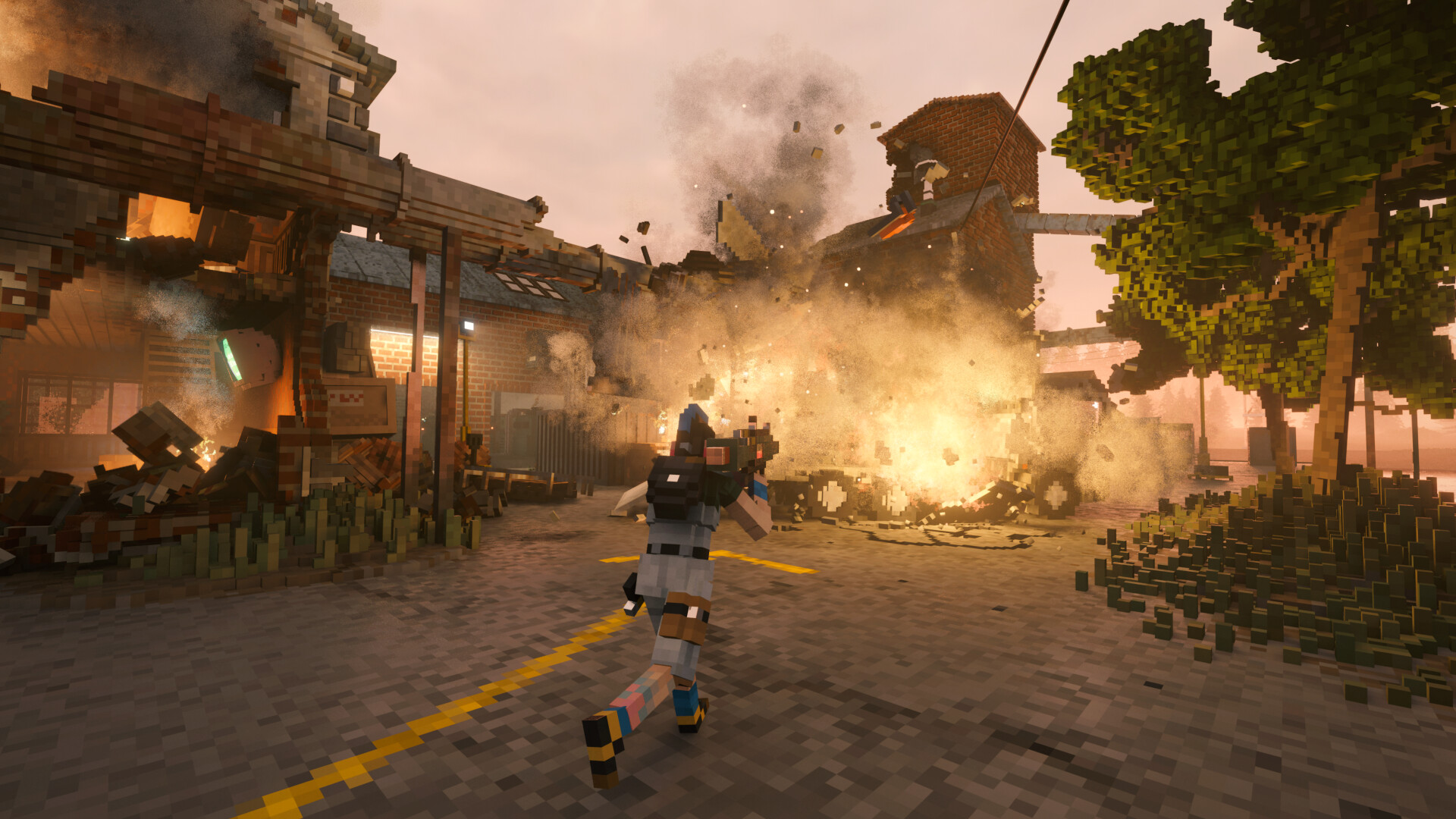
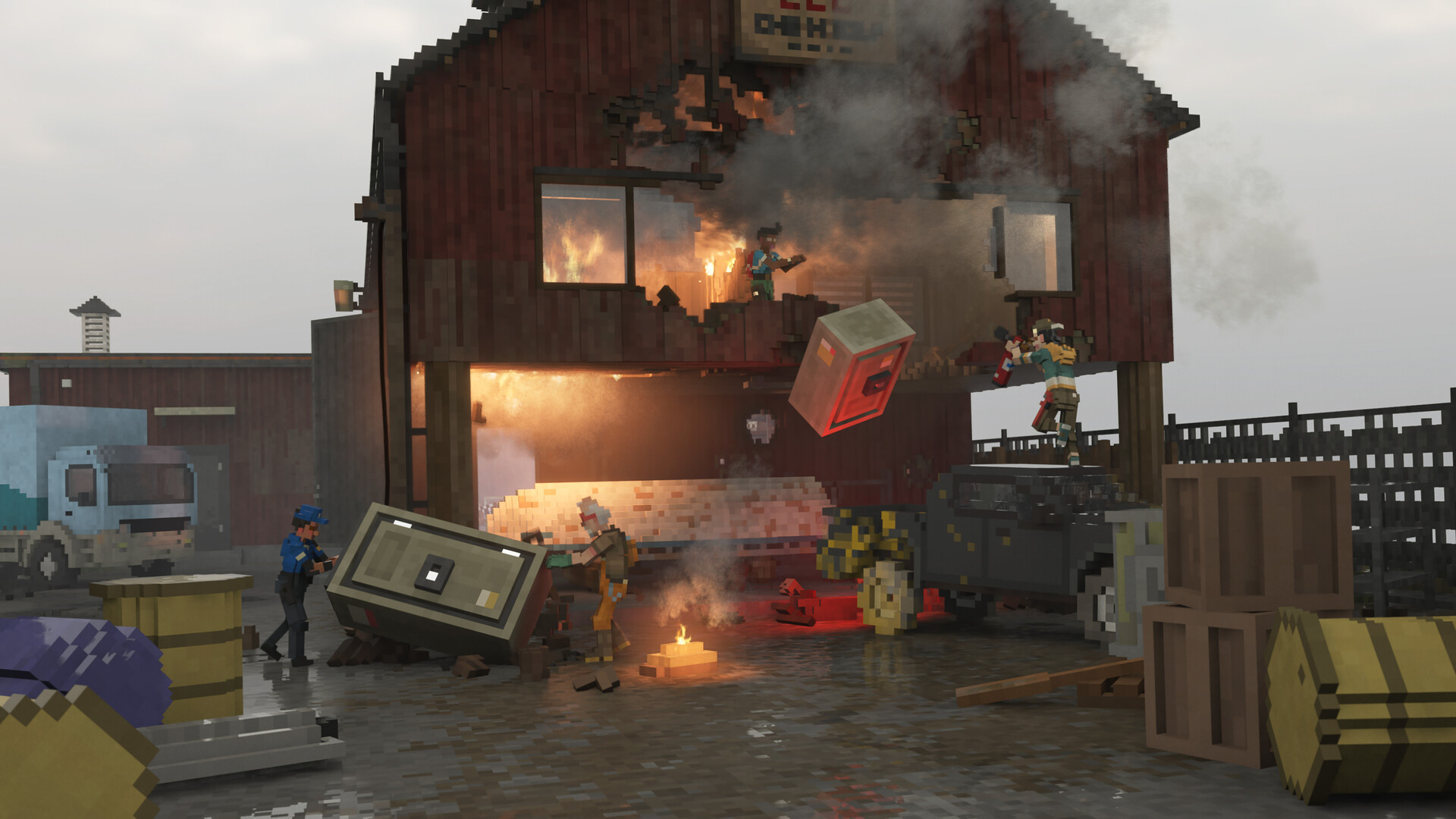
Teardown is a voxel-based destruction game by Swedish developer Tuxedo Labs. If you have never heard of it, think of it as a world made entirely of tiny bricks — like a digital Lego city — where absolutely everything can be smashed, blown up, cut through, or knocked down. The physics are astonishingly realistic. Walls crumble. Roofs collapse. Vehicles plough through buildings. It is genuinely impressive to watch.
But Teardown is not just mindless destruction. The campaign mode is built around heist missions. You are given a location — a warehouse, a shipping yard, a mansion — and told to steal specific items. The catch: the moment you grab the first target, alarms trigger and you have 60 seconds to collect everything and escape. So you spend time before the heist planning your route, smashing shortcuts through walls, positioning vehicles, and creating paths that let you sprint through the level in time. It is part puzzle game, part demolition simulator.
It is available on PC via Steam for around £16. That price point is important because, as you will see, it delivers an absurd amount of content for the money. There is also a sandbox mode with no objectives at all — just a set of tools and a world to destroy however you see fit. PEGI rates it at 7, which feels about right. There is no blood, no gore, and no real violence against people. You are smashing buildings, not characters.
What The Boys Think
The boys discovered Teardown through YouTube, as they do with almost everything these days. One evening my 10-year-old came running downstairs asking if we could get “the game where you smash everything with a wrecking ball.” I looked it up, saw the PEGI 7 rating, watched a few minutes of gameplay, and bought it that same evening. It was one of the better snap decisions I have made.
My 10-year-old approaches Teardown like a proper little engineer. He spends ages planning his heist routes, carefully knocking holes in walls, positioning dump trucks as bridges between buildings, and testing escape paths before triggering the alarm. When a plan comes together and he clears a mission with seconds to spare, the celebration is genuine. He has started drawing his routes on paper before attempting them, which is the kind of problem-solving you cannot buy in a textbook.
My 7-year-old could not care less about the missions. He loads sandbox mode, grabs the sledgehammer, and goes to work. He will spend an hour methodically demolishing an entire building from the ground up, watching the floors pancake down one at a time. Then he discovers the rocket launcher and the whole thing starts again. When they play together, the older one plans the route while the younger one “helps” by smashing things that were definitely not part of the plan. It somehow works.
They also love watching each other play, which matters more than you might think. Teardown is a genuinely entertaining spectator game. They sit side by side, one playing and the other shouting suggestions about where to smash next. “Go through that wall!” “Use the crane!” “There is a shortcut through the roof!” It generates the kind of cooperative excitement that many actual multiplayer games fail to produce.
The Dad Filter
Worth Full Price?
Buy Now. At around £16, Teardown is one of the best value propositions on Steam. The campaign alone has dozens of missions across multiple environments, each with different objectives and escalating complexity. Some missions took my 10-year-old several attempts to crack, which means real replayability rather than a one-and-done experience. Then you have sandbox mode on top of that, plus Steam Workshop mods that add new maps, vehicles, and scenarios. We have had the game for months and the boys still play it regularly. The cost-per-hour ratio is outstanding.
Kid Appeal
High. Destruction physics are universally appealing to children. There is something deeply satisfying about watching a building come apart realistically, and Teardown delivers that feeling better than any game I have seen. But it is not just smashing for the sake of smashing — the heist planning element adds genuine brainpower to the experience. My 10-year-old is developing spatial reasoning and planning skills without realising it. The 7-year-old is learning basic physics — he now understands that if you remove the ground floor supports, the building comes down. Both of them are engaged in completely different ways, and both of them love it.
Parent Tolerance
High. This is one of those rare games that I genuinely enjoy watching. The voxel art style is charming rather than gritty — everything looks like it is made of tiny coloured blocks, so even when a building collapses spectacularly, it feels playful rather than violent. There is no gore, no realistic weapons aimed at people, and no aggressive soundtrack drilling into your skull. The sound design is actually excellent — the crunch of breaking voxels, the rumble of collapsing structures, the satisfying thud of a sledgehammer. It is the kind of ambient noise that does not make you want to leave the room. I have caught myself sitting down “just to watch for a minute” and still being there twenty minutes later.
Family Play Value
Some. Teardown is a single-player game, so you cannot play together in the traditional sense. But it is one of the best spectator games we own. The boys constantly swap the controls, suggest routes to each other, and challenge each other to destroy specific buildings in creative ways. I have had a go myself — the heist missions are genuinely clever puzzles, and there is a real satisfaction in planning and executing a clean route. It has become a shared experience in our house even though only one person holds the mouse at any time. The lack of proper multiplayer is the one thing stopping this from being a perfect family game.
Time Respect
Excellent. This is where Teardown really shines for parents. Heist missions are typically 5 to 10 minutes long, with natural stopping points between each one. There is no “just let me finish this level” that drags on for 45 minutes. When I say “one more mission,” it genuinely means one more mission — a few minutes of planning, a minute of frantic execution, and done. The game saves progress automatically, so you can close it at almost any point without losing anything. Sandbox mode is similarly easy to walk away from. There are no battle passes, no daily login rewards, no manipulative hooks trying to keep your kids playing longer than they should. It respects your family’s time, and I wish more games did that.
Replay Chances
High. The campaign missions can be replayed with different approaches — there is rarely one “correct” route, so the boys keep going back to try new strategies. But the real longevity comes from two things: sandbox mode and the Steam Workshop. Sandbox gives you every tool in the game and lets you loose on the maps with no objectives. My 7-year-old has spent more time in sandbox than in the campaign. The Steam Workshop adds community-created content — new maps, vehicles, scenarios, and tools — that keeps the game fresh long after you have finished the official missions. There are mods that add monster trucks, helicopters, and entirely new environments. The community is active and creative, and the boys regularly browse the Workshop for new things to try.
The Verdict
Buy Now. Teardown is one of those rare games that earns an enthusiastic recommendation across the board. At £16, the value is exceptional. The campaign is clever and genuinely challenging, the sandbox mode is endlessly entertaining, and the Steam Workshop keeps adding free content. It is safe for young kids, satisfying for older ones, and honestly pretty fun for adults too.
The destruction physics are best-in-class. Watching a building come apart voxel by voxel never gets old, whether you are a 7-year-old with a sledgehammer or a 10-year-old planning an elaborate heist route. The session length respects your time — something that matters enormously when you are managing screen time for two boys who would happily play all evening.
The only real downside is that it is PC-only. If your family games primarily on console, this one is not available to you. But if you have a PC — even a mid-range one — Teardown should be near the top of your list. It has been a permanent fixture on our computer for months, and I cannot see that changing any time soon.
Related: Check out our BeamNG.drive review for another physics sandbox the boys love. For all our family gaming content, visit TurboGeek Gaming.