
TL;DR
- What it is: NanaOn-Sha’s 1996 rhythm game — the one that invented the genre
- Platform/Price: PS1 boxed — around £20 to £40; PS4 Remastered is cheaper
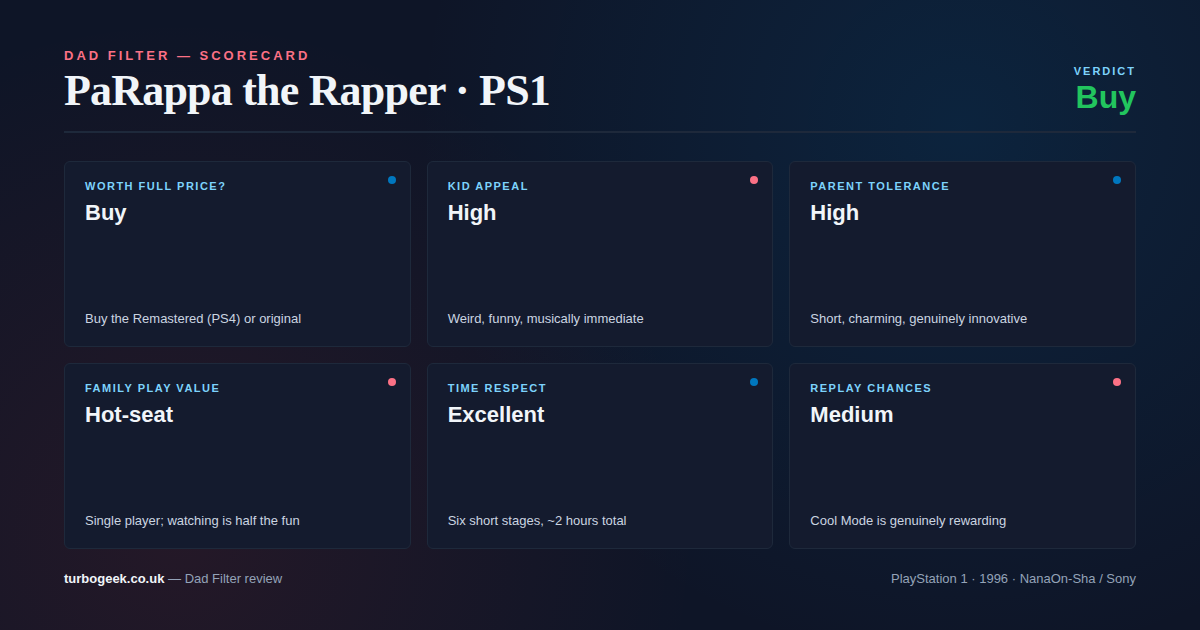
- Dad Filter verdict: Buy — short, funny, historically important, still plays beautifully
- One thing to know: Without PaRappa there is no Dance Dance Revolution, no Guitar Hero, no Just Dance
New to TurboGeek Gaming? Start with the Dad Filter manifesto to understand how I review games — as a 46-year-old dad with two boys aged 10 and 7, not as a professional games journalist. Then check the Gaming hub for every review.
What It Is
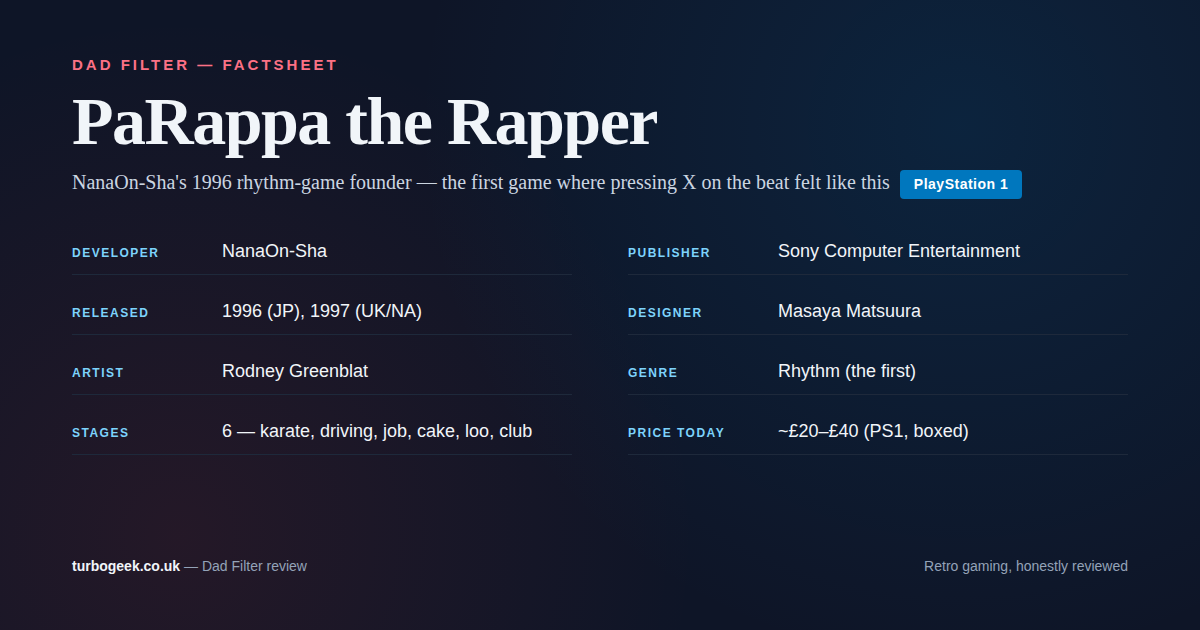
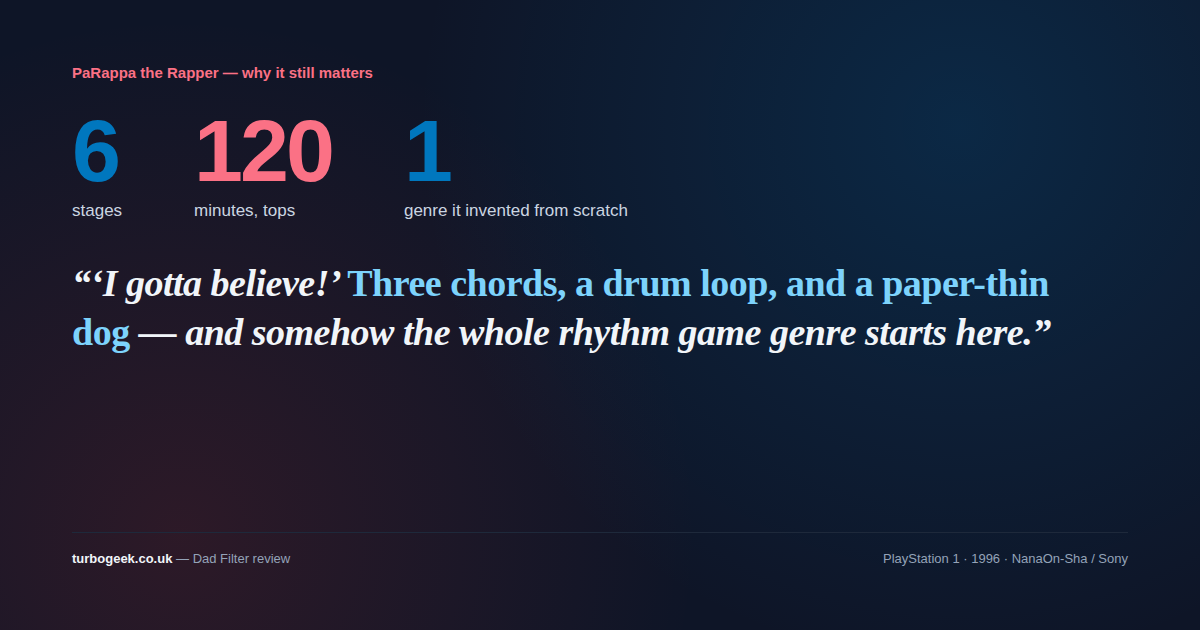
PaRappa the Rapper is a rhythm game developed by NanaOn-Sha and published by Sony Computer Entertainment in late 1996 in Japan and early 1997 in the rest of the world. You play PaRappa, a paper-thin 2D cartoon dog in sunglasses and a beanie, who has to rap his way through six increasingly surreal stages: learning karate from a chicken-onion fusion creature; passing his driving test with a moose; working a kitchen job baking a cake; and, famously, queuing for the toilet in a club. The gameplay is a call-and-response rhythm system — the on-screen rapper raps at you, then you rap back by pressing buttons in time to an on-screen prompt strip.
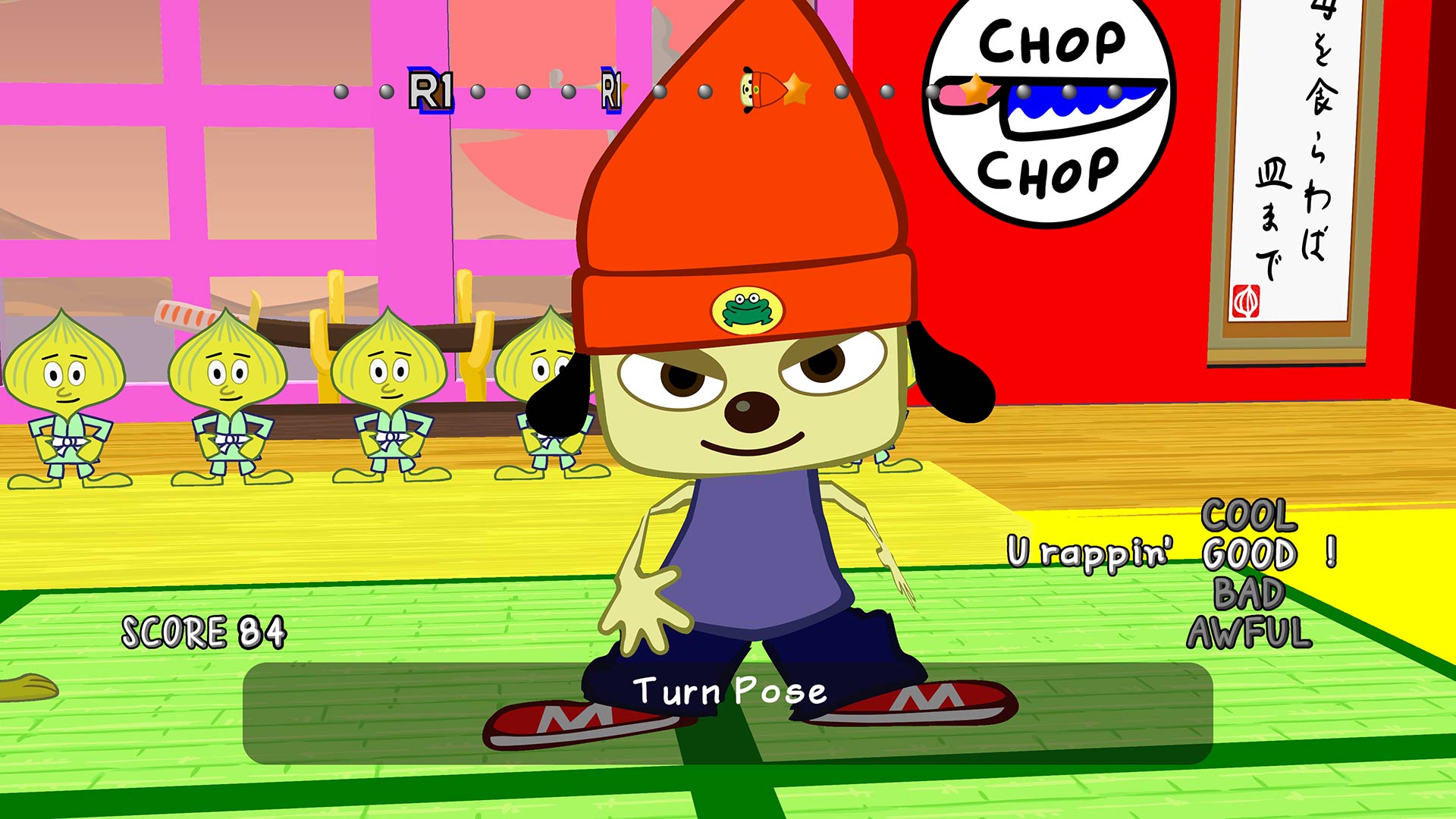
Two people made this possible. Masaya Matsuura wrote the music and designed the rhythm system. Rodney Greenblat, an American illustrator, designed every visual element, giving the game its paper-cut aesthetic that nothing else has ever quite replicated. Together they invented the rhythm game genre on PlayStation 1 in 1996. Everything that followed — Dance Dance Revolution, Guitar Hero, Rock Band, Rhythm Heaven, Just Dance — owes a debt to this two-hour cartoon.
Why This One Matters To Me
PaRappa arrived in the UK in 1997 when the PS1 was already established and everyone had a friend who had one, but not everyone had access to one. The demo disc on a PlayStation Magazine cover, with the karate stage, was a cultural moment. You could watch someone play it and want to be better at it. You could watch someone fail it and laugh.
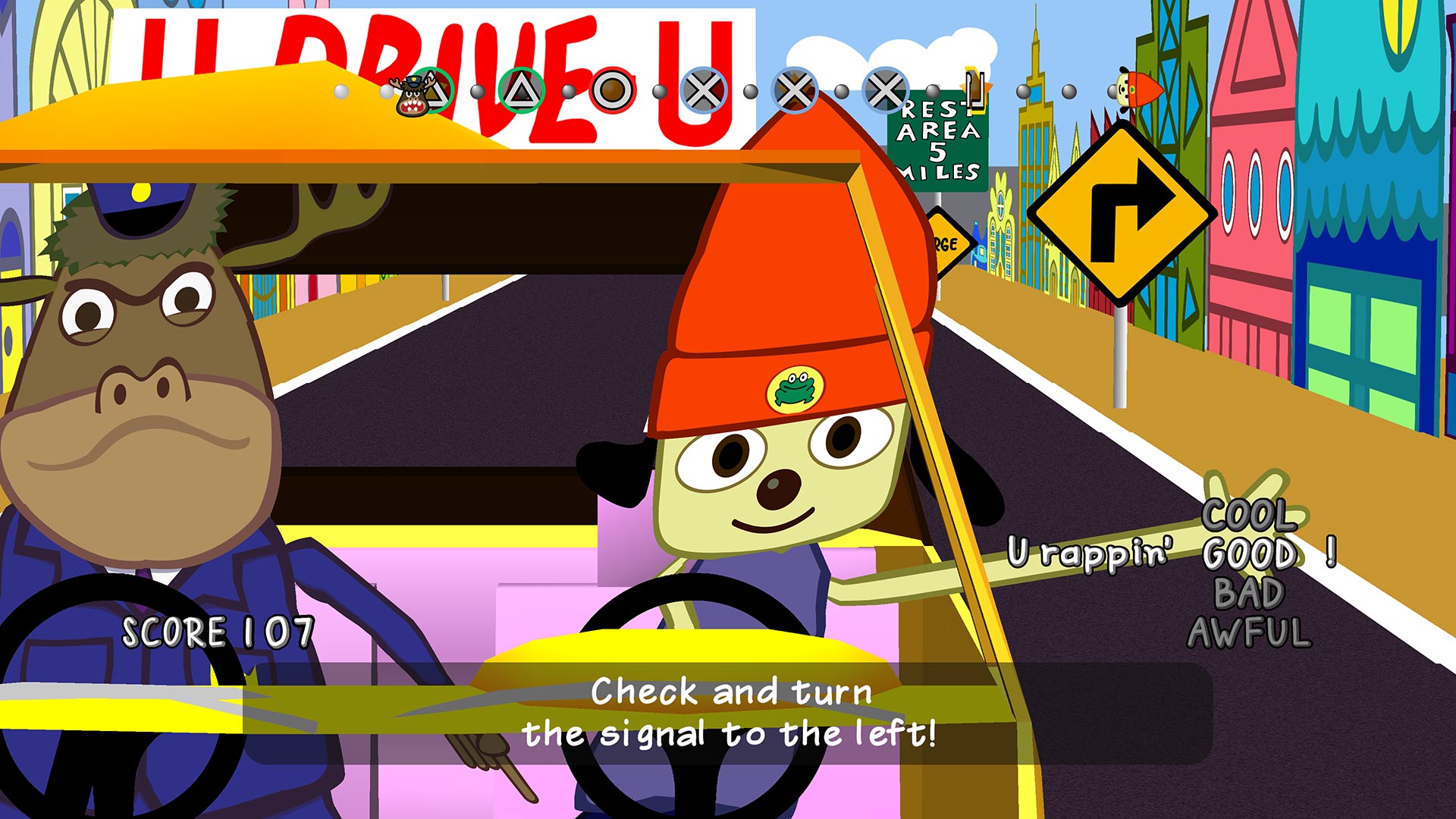
Thirty years later, the game is almost exactly as charming. The humour is gentle. The visual design is completely distinctive. The music is genuinely good — the karate song, the driving song, and the noodles-in-a-bowl song are still earworms. The rhythm detection has a slight looseness that was criticised at the time but actually makes the game much more approachable than later, stricter rhythm games.
The rhythm system’s real genius is Cool Mode. If you rap well enough during a stage, the teacher-character says ‘You’re on your way’ and steps aside, and PaRappa takes over, freestyling over an extended instrumental. Cool Mode is where the game’s heart is. It rewards you for playing loose with the beat rather than strictly hitting every note, which is a design philosophy that the rhythm games of the 2000s largely abandoned and which has been rediscovered by games like Hi-Fi Rush.
The kids loved it more than any other game in this retro series. My seven-year-old sang the noodles song for a week. My ten-year-old tried to master Cool Mode on the karate stage. This is an absolutely appropriate game to hand down to kids, and the fact that it only lasts about two hours means you can legitimately finish it over a weekend together.
The Dad Filter
Worth Full Price?
Buy. The PS4 Remastered version is the practical purchase — available on PS4 and compatible with PS5, around £10 to £15, and it preserves the original experience with cleaner visuals.
Boxed PS1 originals are now collector items — £20 to £40 depending on condition — because the game has never gone out of cultural rotation. Either option is defensible.
Kid Appeal
High. Kids respond to PaRappa in a way they do not respond to almost any other retro game. The humour is broad and kind. The music is immediate. The rhythm challenge is achievable enough that kids do not get frustrated.
This is the one game from this retro list that I have added to the rotation at home. My boys play it regularly. That is, frankly, the highest possible recommendation.
Parent Tolerance
High. It is short. It is funny. The music is good. There is no grinding, no difficulty wall, no life service element. You play it, you enjoy it, you put it down. That is the entire experience.
If there is a complaint, it is that the brevity is the point — six stages, two hours, done. A longer PaRappa would have been a worse PaRappa.
Family Play Value
Hot-seat in practice, spectator in reality. PaRappa is single-player, but watching someone try to nail Cool Mode on the karate stage is a legitimately funny family activity. The game is as much about the performance as the score.
Hand the controller between kids and adults between stages. Everyone sings along. This is exactly the kind of retro game that survives a family context.
Time Respect
Excellent. The whole game is two hours from start to finish. You can play a stage in 10-15 minutes and walk away at any point. Cool Mode adds replay value without lengthening any individual stage significantly.
No open world. No side content. No live service. A game that respects every minute of your time.
Replay Chances
Medium. Once you have finished the six stages, the replay value is in getting Cool Mode on each stage. That is a real challenge that rewards serious practice.
Beyond that, you will return to it every few years for the music. It is more of a rewatchable album than a replayable game, and that is fine.
The Verdict
Buy. PaRappa the Rapper is the founding text of the rhythm game genre, a genuinely funny and musically excellent two-hour experience, and one of a small handful of retro games that holds up perfectly for modern kids. There are not many games I would buy twice. This is one of them.
The PS4 Remastered is the recommended version for most people. The original PS1 boxed copy is increasingly a collectors’ item rather than a playable artefact. Either way, the core experience has not aged in any meaningful sense — the rhythm detection was loose at the time and is still pleasingly loose, the humour is gentle and timeless, and the music is deathless.
This is the rare retro review where I would recommend it to people with no existing PS1 nostalgia. PaRappa the Rapper is simply a very good game that happens to have arrived in 1996. Play it with your kids. Learn the noodles song. It will be stuck in your head for months, and you will not mind.
Related Reviews
- Bomb Jack on C16/Plus 4 — Dad Review — The arcade in a cassette box, reviewed forty years on.
- V-Rally ’97 — Dad Review — Another nostalgia-first review, this time the PS1 rally classic.
- TurboGeek Gaming Hub — Every review, guide, and parent resource in one place.
- The Dad Filter Manifesto — How and why I review games as a dad, not a gamer.
Leave a Reply